
Introduction

The keto flu describes a set of symptoms some people may experience when starting a ketogenic diet. It’s not actual flu—it’s a collection of temporary symptoms caused by your body’s metabolic shift from glucose to fat-burning. The ketogenic diet has gained popularity as a natural way to lose weight and potentially improve metabolic health, but this initial adaptation phase catches many people off guard.[1]
Here’s what makes it challenging: The worst symptoms hit days 3-5, exactly when your motivation is highest. Fatigue, brain fog, intense cravings, muscle cramps—all hitting at once. Many people quit before week 2, assuming keto “isn’t working” or isn’t for them. In fact, research suggests that around one in four people starting a ketogenic diet experience some degree of keto flu symptoms, with severity varying widely based on individual factors.[2]
But what if the adaptation phase didn’t have to be so miserable?
In this updated guide, we’ll cover what causes keto flu, why it’s temporary, AND the most effective relief strategies—including how metabolic support can smooth the transition and keep you consistent through week 2 (when results start appearing). You’ll learn evidence-based approaches that address the root causes, not just mask symptoms.
Pro tip: Download our free ‘Keto Flu Relief Checklist’ below—it covers the 7 most effective remedies plus supplement considerations, so you can prepare BEFORE symptoms hit.
[EMAIL CAPTURE FORM]
Headline: Get Your Free Keto Flu Relief Checklist
Subhead: The 7-step action plan for days 1-14 (plus supplement guide)
Button: Send Me the Free Checklist
Quick Summary (TL;DR)
- ✓ Keto flu usually peaks around days 3–5 and resolves by day 7–10 with proper management
- ✓ Main drivers: electrolyte loss, dehydration, and metabolic transition (not dangerous)
- ✓ Most symptoms improve quickly with more fluids, electrolytes, sleep, and adequate fat
- ✓ Targeted metabolic support (like natural thermogenic formulas) may help ease the worst days for some people
- ✓ If you make it through week 2, you’re almost certainly going to succeed
What Is the Keto Flu?
The keto flu is a collection of symptoms experienced by some people when they first start the keto diet. These symptoms, which can feel similar to the flu, are caused by the body adapting to a new diet consisting of very little carbohydrates.
Carbohydrates are the body’s default source of energy. On a standard diet, your body breaks down carbs into glucose (blood sugar), which your cells use for fuel. When you drastically reduce carb intake—typically to under 50 grams per day on a ketogenic diet—your body must find an alternative fuel source.[3]
This is where ketones come in. After several days of carb restriction, your liver begins breaking down fat into molecules called ketone bodies (or ketones). Your brain, muscles, and organs learn to use these ketones for energy instead of glucose. This metabolic state is called ketosis, and it’s the foundation of how ketogenic diets work.[4]
The transition from glucose-burning to fat-burning doesn’t happen instantly. During the first week, your body is essentially operating in a “between state”—glucose stores are depleted, but ketone production isn’t yet optimized. This metabolic gap is what causes keto flu symptoms.
Why Some People Suffer More Than Others
Here’s the key insight: Your susceptibility to keto flu depends on several factors. If you’re coming from a high-carb diet (especially refined carbs—pasta, bread, soda, sugary snacks), your body has been relying heavily on glucose for years, possibly decades. The transition is more dramatic. Your metabolic machinery is optimized for glucose metabolism, and the switch requires significant enzymatic and hormonal adjustments.[5]
Conversely, someone already eating relatively low-carb (under 100-150 grams daily) may adapt with minimal symptoms. Their body already has some metabolic flexibility—the ability to switch between fuel sources more easily.
Other factors that influence keto flu severity include:
- Electrolyte status before starting: People with marginal mineral intake experience more severe symptoms
- Hydration baseline: Chronic mild dehydration worsens the adaptation period
- Genetics: Variations in genes related to fat metabolism (like APOE) may affect adaptation speed[6]
- Previous dieting history: Metabolic adaptation from past restrictive diets can complicate the transition
- Existing metabolic health: Insulin resistance or metabolic syndrome may extend adaptation time
- Physical activity level: Very active individuals often experience more intense symptoms initially
Understanding this matters because it helps you prepare strategically. If you predict you’ll struggle with the transition (high carb background, history of caffeine withdrawal sensitivity, low energy baseline), proactive support during days 3-7 can be game-changing. Let’s explore the most effective strategies.
Symptoms and Signs of Keto Flu
Keto flu symptoms can range from mild to severe and vary from person to person. The symptoms typically begin within the first few days of starting the diet and can last anywhere from a few days to several weeks (though most people find relief within 7-10 days with proper management).
Common keto flu symptoms include:[7]
- Nausea
- Vomiting (less common, but can occur)
- Constipation
- Diarrhea
- Headache (often described as a persistent, dull ache)
- Irritability and mood swings
- Weakness and fatigue
- Dizziness and “brain fog”
- Sugar cravings (especially for former high-carb foods)
- Difficulty concentrating
- Muscle cramps and soreness
- Trouble sleeping or insomnia
- Bad breath (a metallic or fruity smell from ketones)
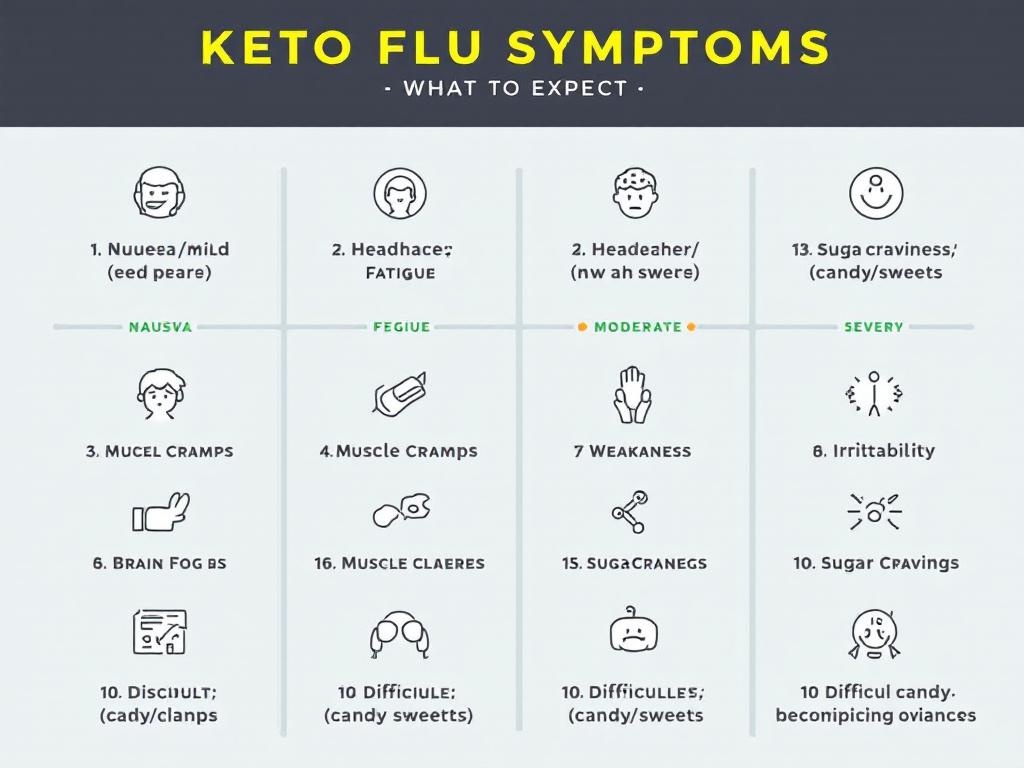
The severity and combination of symptoms varies considerably. Some people experience only mild fatigue and headaches, while others report debilitating exhaustion and nausea that interferes with daily activities.
Important context: These symptoms, while uncomfortable, are not dangerous. They’re your body’s signals that metabolic adaptation is happening. Unlike actual influenza, keto flu cannot cause complications, spread to others, or result in serious illness—it’s purely a physiological transition period. If symptoms are severe or persist beyond 2-3 weeks, however, it’s worth consulting with a healthcare provider to rule out other issues.
The timeline typically follows this pattern:
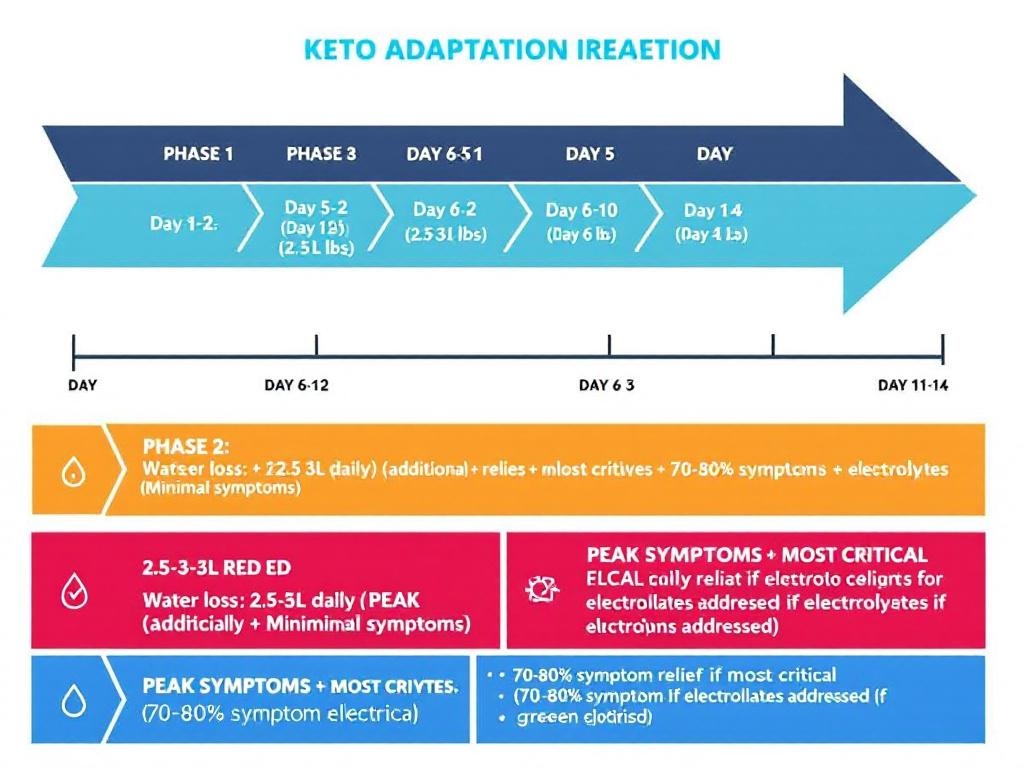
- Days 1-2: Minimal symptoms; some people feel energized from dietary change
- Days 3-5: Peak symptom intensity for most people
- Days 6-10: Gradual improvement as ketone production increases
- Days 11-14: Most symptoms resolved; energy begins returning
- Week 3+: Full adaptation; many report energy levels higher than pre-keto baseline
What Causes the Keto Flu?
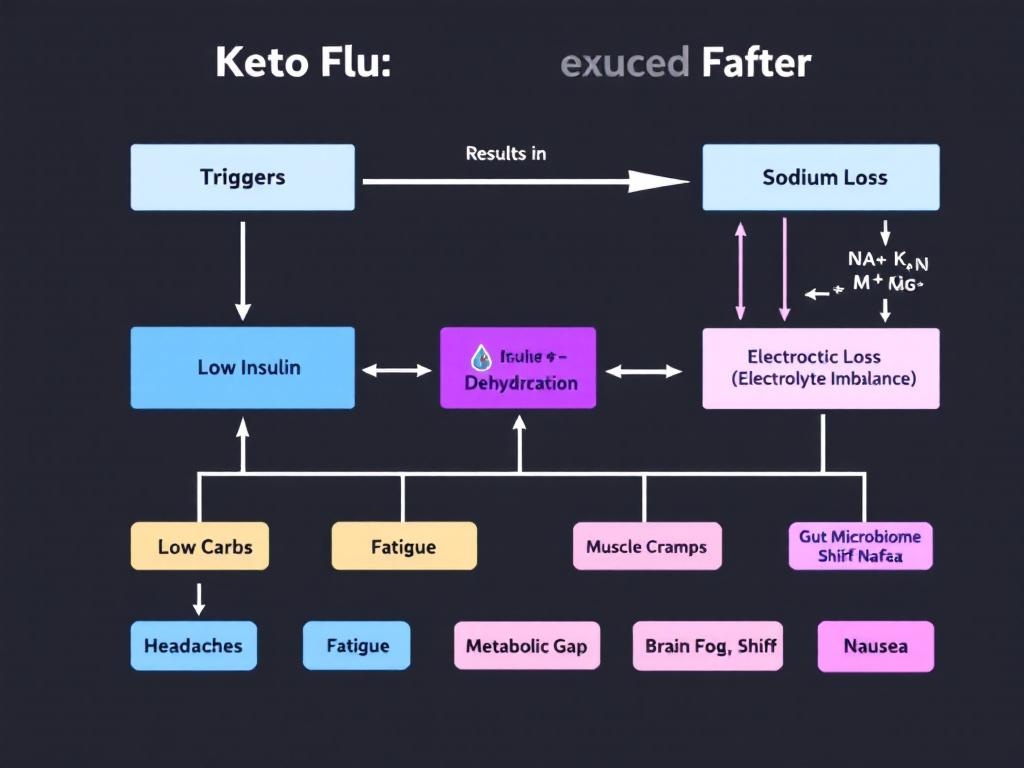
The keto flu happens as your body transitions from burning sugar to burning fat as its primary fuel source. This metabolic shift triggers several physiological changes that contribute to symptoms:
1. Carbohydrate Withdrawal
For many people, carbs (especially refined carbs and sugar) have mild addictive properties. They trigger dopamine release in the brain’s reward centers, similar to other pleasurable substances.[8] When you suddenly eliminate them, you may experience withdrawal-like symptoms: cravings, irritability, and mood changes.
This is particularly pronounced if you previously consumed high amounts of sugar or processed carbs. Your brain has been conditioned to expect regular glucose spikes, and the absence creates a temporary neurochemical imbalance.
2. Electrolyte Imbalances
This is one of the most significant—and most correctable—causes of keto flu symptoms.
When you restrict carbs, your insulin levels drop significantly. While this is beneficial for fat loss and metabolic health, it has an immediate side effect: your kidneys excrete more sodium and water.[9] This happens because insulin normally signals your kidneys to retain sodium. Without that signal, sodium (and the water that follows it) is lost through urine.
As sodium levels drop, your body also loses other crucial electrolytes:
- Potassium: Works in balance with sodium for cellular function
- Magnesium: Essential for muscle function and energy production
- Calcium: Important for muscle contraction and nerve signaling
Low electrolyte levels directly cause many keto flu symptoms:
- Low sodium → headaches, fatigue, weakness
- Low potassium → muscle cramps, heart palpitations
- Low magnesium → muscle soreness, insomnia, anxiety
3. Dehydration
The water loss that accompanies sodium excretion can lead to mild dehydration, even if you’re drinking your usual amount of water. During the first week of keto, you may lose 5-10 pounds—much of this is water weight from depleted glycogen stores (stored carbs in muscles and liver). Each gram of glycogen is stored with 3-4 grams of water.[10]
This rapid water loss contributes to headaches, dizziness, and fatigue.
4. Metabolic Transition Period
Your cells contain thousands of enzymes, many of which are optimized for glucose metabolism. Switching to fat metabolism requires:
- Upregulation of fat-oxidizing enzymes: Your mitochondria (cellular energy factories) must produce more enzymes for burning fat
- Increased ketone production: Your liver must ramp up ketogenesis (ketone production)
- Cellular adaptation: Your brain cells, muscle cells, and other tissues must adjust to using ketones efficiently
This doesn’t happen overnight. During days 3-7, you’re in a metabolic “no man’s land”—glucose is depleted, but ketone production isn’t yet optimized. This gap causes the energy crashes and brain fog many people report.[11]
5. Changes in Gut Microbiome
Your gut bacteria thrive on the foods you eat. A dramatic dietary shift affects your microbiome composition, potentially causing temporary digestive issues (constipation, diarrhea, bloating) as bacterial populations adjust.[12]
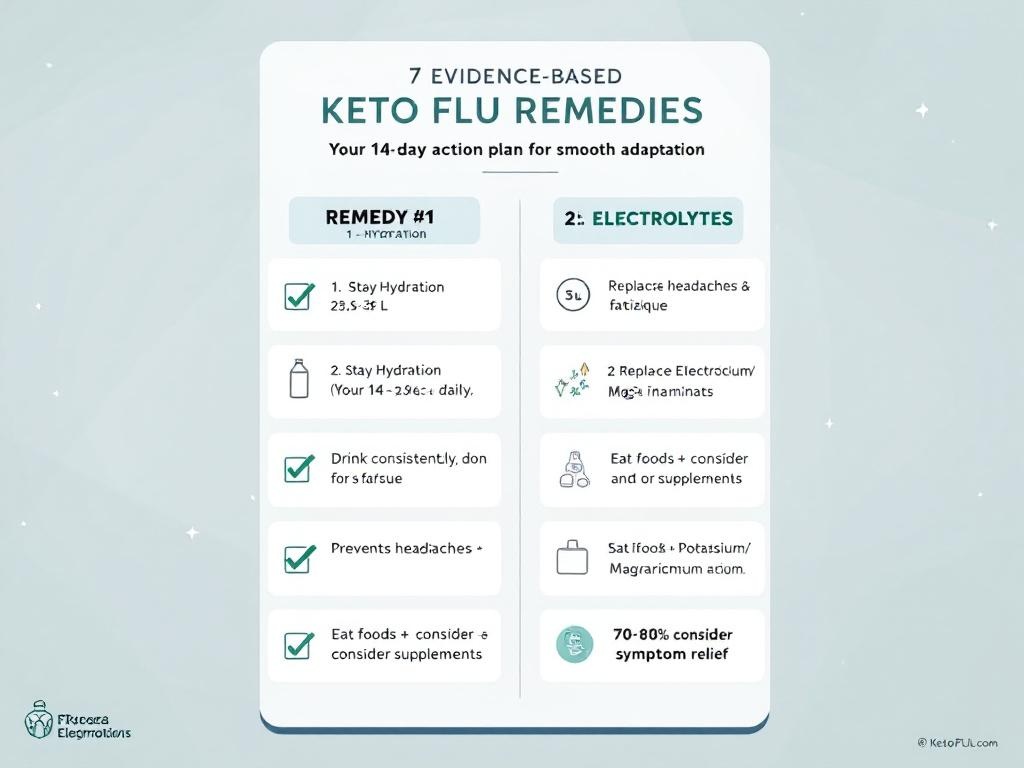
How to Get Rid of Keto Flu: 7 Evidence-Based Remedies
The good news: Keto flu is highly manageable with the right strategies. Most symptoms can be minimized or eliminated by addressing the root causes. Here’s what actually works, backed by research and clinical experience.
1. Stay Hydrated
Why it works: Replacing the water lost during initial carb restriction prevents dehydration-related symptoms (headaches, dizziness, fatigue).
How to implement:
- Drink 2.5-3 liters (80-100 oz) of water daily during the first two weeks
- Don’t wait until you’re thirsty—thirst is a late indicator of dehydration
- Spread intake throughout the day (not all at once)
- Monitor urine color: pale yellow indicates good hydration; dark yellow suggests you need more fluids
Pro tip: Keep a water bottle with measurements visible. Aim to finish specific amounts by certain times (e.g., 1 liter by noon, 2 liters by 5 PM).
Research shows that even mild dehydration (1-2% body weight loss from fluids) impairs cognitive function and mood—exactly the symptoms you’re trying to avoid.[13]
2. Replace Electrolytes
Why it works: This addresses a major driver of keto flu—mineral depletion from increased urinary losses.
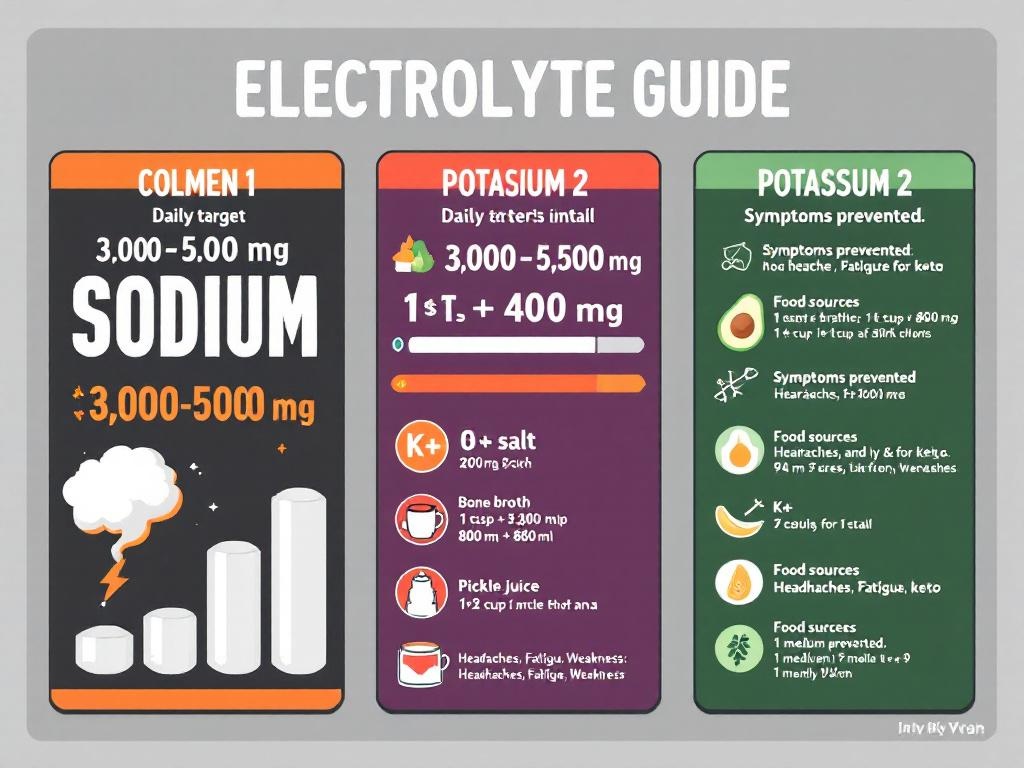
Specific targets for the first 2 weeks:[14]
- Sodium: 3,000-5,000 mg daily (yes, this is higher than standard recommendations, but necessary during adaptation)
- Potassium: 3,000-4,000 mg daily
- Magnesium: 300-400 mg daily (use magnesium glycinate or citrate for better absorption)
How to implement:
For sodium:
- Add ½ to 1 teaspoon of high-quality sea salt or Himalayan salt to your water throughout the day
- Salt your food generously
- Drink bone broth (provides sodium plus other minerals)
- Consider pickle juice (½ cup provides ~800mg sodium)
For potassium:
- Eat potassium-rich keto foods: avocados (1 medium = 975mg), spinach (1 cup cooked = 840mg), salmon (6oz = 1,000mg)
- Use salt substitutes like “Lite Salt” (mixture of sodium and potassium chloride)
- Consider a potassium supplement if dietary intake is insufficient (but don’t exceed 99mg per dose without medical supervision)
For magnesium:
- Eat magnesium-rich foods: pumpkin seeds (¼ cup = 190mg), almonds (1oz = 80mg), dark chocolate (1oz = 64mg)
- Take a magnesium supplement in the evening (bonus: helps with sleep)
- Avoid magnesium oxide (poorly absorbed); choose glycinate, citrate, or threonate forms
Important: If you have kidney disease or take certain medications (especially blood pressure medications), consult your doctor before significantly increasing electrolyte intake.
Many people report that properly addressing electrolytes alone eliminates 70-80% of their keto flu symptoms within 24-48 hours.
3. Avoid Strenuous Exercise (Temporarily)
Why it works: Your body is already under metabolic stress during adaptation. Intense exercise adds additional stress and depletes already-low glycogen stores.
How to implement:
- Week 1: Stick to light activities—walking, gentle yoga, stretching
- Week 2: Gradually reintroduce moderate exercise—light jogging, cycling, swimming
- Week 3+: Return to full training intensity once energy levels normalize
This doesn’t mean become sedentary. Light movement actually helps with:
- Maintaining insulin sensitivity
- Supporting lymphatic drainage (reduces feeling of sluggishness)
- Mood regulation (releases endorphins)
- Reducing stress
Research on athletes transitioning to ketogenic diets shows that performance typically dips for 1-3 weeks before returning to baseline or improving.[15] Pushing through with high-intensity training during week 1 extends adaptation time and worsens symptoms.
Exception: If you’re already fat-adapted from previous keto experience, you can maintain normal training.
4. Get Adequate Sleep
Why it works: Sleep is when your body does its deepest metabolic and hormonal regulation. During keto adaptation, you’re asking your body to make significant enzymatic and metabolic changes—this happens primarily during sleep.[16]
How to implement:
- Aim for 7-9 hours per night (non-negotiable during adaptation)
- Maintain consistent sleep/wake times (even on weekends)
- Create a dark, cool sleeping environment (65-68°F is optimal)
- Avoid screens 1 hour before bed (blue light disrupts melatonin)
- Consider magnesium glycinate before bed (supports sleep quality)
Common issue: Some people experience insomnia during keto adaptation, despite feeling tired. This is often caused by:
- Cortisol dysregulation (stress hormone affected by dietary change)
- Low magnesium
- Eating too close to bedtime
- Consuming caffeine too late in the day
If insomnia persists, try:
- Eating your last meal 3-4 hours before bed
- Taking 200-400mg magnesium glycinate 1 hour before sleep
- Practicing relaxation techniques (deep breathing, meditation)
- Ensuring adequate fat and calorie intake (undereating can raise cortisol)
5. Make Sure You’re Eating Enough Fat (and Calories)
Why it works: If you cut carbs but don’t replace those calories with fat, you’re simply undereating. This creates an energy deficit that worsens fatigue and slows metabolic adaptation.
How to implement:
- Calculate your needs: During adaptation (first 2-3 weeks), aim for roughly maintenance calories (not a deficit)
- Fat should be 70-75% of calories: This trains your body to efficiently burn fat
- Don’t fear fat: Include generous amounts of olive oil, avocados, nuts, fatty fish, butter, coconut oil
Example day (for someone needing 2,000 calories):
- Breakfast: 3 eggs cooked in butter, ½ avocado, spinach (500 cal, 40g fat)
- Lunch: Salmon salad with olive oil dressing, mixed greens, nuts (600 cal, 45g fat)
- Dinner: Grass-fed beef, roasted vegetables with olive oil, side salad (700 cal, 50g fat)
- Snack: Macadamia nuts, cheese (200 cal, 18g fat)
- Total: 2,000 calories, 153g fat (69% of calories)
Common mistake: People coming from low-fat diet mentality often don’t eat enough fat during keto adaptation. They’re afraid of fat, so they end up eating low-carb AND low-fat—which is just low-calorie and miserable.
During adaptation, your body needs abundant fat to:
- Provide immediate energy (since glucose is depleted)
- Signal that fat is the primary fuel (upregulates fat-burning enzymes)
- Support hormone production (many hormones are made from cholesterol and fats)
- Maintain satiety (prevents excessive hunger and cravings)
After adaptation (week 3+): If your goal is weight loss, you can then create a modest calorie deficit (300-500 calories below maintenance). But during adaptation, prioritize consistency over restriction.
6. Ease Into the Diet Gradually (If You Haven’t Started Yet)
Why it works: A gradual transition gives your body time to adjust metabolically without the shock of sudden carb elimination.
How to implement (if you’re planning to start keto):
- Week 1: Reduce carbs to 100-150g daily (eliminate obvious sources: bread, pasta, rice, sugar)
- Week 2: Reduce to 50-75g daily (eliminate most grains, starchy vegetables, fruits except berries)
- Week 3: Drop to under 25-50g daily (full ketogenic levels)
This stepwise approach allows:
- Gradual insulin reduction (less dramatic sodium loss)
- Slower metabolic adaptation (less severe symptoms)
- Psychological adjustment (easier to sustain long-term)
Note: If you’ve already started keto and are experiencing symptoms, it’s generally better to push through (with the support strategies above) rather than cycling back to higher carbs, which can prolong adaptation.
7. Support Your Metabolic Transition with Natural Thermogenic Compounds
While hydration, electrolytes, rest, and adequate fat are the foundation, research suggests that specific botanical compounds can ease the adaptation phase by supporting metabolic stability during the glucose-to-ketone transition.
The Science Behind Thermogenic Support
During days 3-7, you’re in a metabolic “transition zone”—glucose is depleted, but ketone production isn’t yet fully optimized. This metabolic gap causes the energy crashes and brain fog many people report.
Bitter Orange Extract (Synephrine): Research indicates that synephrine activates AMPK, an enzyme central to energy regulation, and may increase metabolic rate by a modest percentage without the jittery side effects of synthetic caffeine.[17] During keto adaptation, this support can help maintain baseline energy when fatigue typically peaks.
Thermogenic Spices (Ginger, Capsaicin): These compounds have been used traditionally for digestion and energy support. Modern research shows:
- Capsaicin (from hot peppers) activates thermogenesis and may support fat oxidation[18]
- Ginger has been shown to reduce nausea and support digestive comfort during dietary transitions[19]
How these work together: When you combine natural thermogenic support with proper hydration, electrolytes, rest, and adequate fat intake, you create a synergistic effect:
- Thermogenic support maintains baseline energy (reducing fatigue during adaptation)
- Improved fat oxidation aligns with keto’s metabolic goal
- Digestive support reduces nausea and stomach discomfort
- Clean formulations (free of synthetic additives) minimize metabolic stress
How KetoActives Fits Into a Keto Flu Strategy
KetoActives is one formulation designed specifically for the keto adaptation phase. It combines:
- Bitter orange extract (thermogenic support)
- Thermogenic spices (digestive support + energy)
- Herbal digestive botanicals (comfort during dietary shift)
- NuRice instead of magnesium stearate (hypoallergenic, clean formula)
Many users report:
- ✓ Sustained energy through days 3-7 (the hardest adaptation period)
- ✓ Reduced carb cravings
- ✓ Better appetite control
- ✓ Smoother transition to the appetite-suppressed state that ketosis naturally creates
Important: This doesn’t mean metabolic support is necessary—many people successfully navigate keto flu with just the foundational strategies above. But for those with high-carb backgrounds, sensitivity to adaptation, or goals for optimizing results in weeks 1-4, targeted support can meaningfully improve the experience.
If considering supplement support during keto adaptation, evaluate:
- ✓ Natural ingredients (vs. synthetic stimulants)
- ✓ Research backing (citations, not just marketing claims)
- ✓ Formula transparency (full ingredients list, no proprietary blends)
- ✓ Clean additives (avoid controversial fillers)
- ✓ Dosing appropriateness (modest support, not extreme)
Frequently Asked Questions About Keto Flu
Does everyone get keto flu?
No. Research suggests that around 1 in 4 people experience keto flu symptoms, while others adapt with minimal to no discomfort.[2] Your background, genetics, and preparation level all influence whether you’ll experience it.
How long does keto flu last?
For most people, symptoms peak around days 3-5 and resolve by day 7-10 with proper management (hydration, electrolytes, rest). Some people resolve symptoms faster; others may take 2-3 weeks. The key is addressing root causes, not waiting it out.
Can you avoid keto flu completely?
Many people minimize or prevent keto flu by gradually reducing carbs over 2-3 weeks instead of eliminating them immediately, maintaining proper electrolyte and hydration levels before starting, and ensuring adequate fat intake. Starting with support (hydration protocol, electrolytes, sleep) significantly reduces severity.
Is keto flu dangerous?
No. Keto flu is purely a physiological adaptation signal—not dangerous and cannot cause serious complications. It’s your body’s way of adjusting to a new fuel source. If symptoms are severe or persistent beyond 2-3 weeks, consult a healthcare provider to rule out other issues.
Should you stop keto if symptoms are severe?
Generally, no. With proper management (hydration, electrolytes, rest, adequate fat), symptoms improve rapidly. However, if symptoms are extreme, you can take a 3-5 day break while maintaining keto levels, or consult a healthcare provider for personalized guidance. Cycling back to high carbs prolongs adaptation.

Bottom Line
Keto flu is a collection of temporary symptoms your body experiences while adapting to ketogenic metabolism. While uncomfortable, it’s not dangerous and highly manageable with the right approach.
To reduce keto flu symptoms and support smooth adaptation:
✓ Stay hydrated (2.5-3L daily) — prevents dehydration-related fatigue and headaches
✓ Replace electrolytes — addresses the primary driver (sodium/potassium loss)
✓ Avoid intense exercise temporarily — reduces metabolic stress
✓ Get adequate sleep (7-9 hours) — supports metabolic adjustment
✓ Ensure proper fat intake — prevents undereating and stabilizes energy
✓ Ease in gradually (if possible) — smoother adaptation
✓ Consider metabolic support — helps bridge the energy gap for some people
The critical insight: Days 3-7 are the hardest. If you make it through week 2 consistently, you’re almost certainly going to succeed. By week 3, most people report energy returning, results appearing, and symptoms resolved.
Ready to Start Keto Without the Misery?
Natural thermogenic formula for the first 2 weeks of keto
Additional Resources
For a complete week-by-week breakdown of what to expect and when results appear, see our full 8-week keto guide.
For a deeper comparison of supplement options, see our guide to the best keto supplements for beginners.
Sources & Research
[1] Harvard T.H. Chan School of Public Health. “Diet Review: Ketogenic Diet for Weight Loss.” https://nutritionsource.hsph.harvard.edu/healthy-weight/diet-reviews/ketogenic-diet/
[2] Bostock ECS, et al. (2020). “Consumer reports of ‘keto flu’ associated with the ketogenic diet.” ResearchGate. https://pmc.ncbi.nlm.nih.gov/articles/PMC7082414/
[3] Paoli A, et al. (2013). “Beyond weight loss: a review of the therapeutic uses of very-low-carbohydrate (ketogenic) diets.” European Journal of Clinical Nutrition, 67(8):789–96.
[4] Dhillon KK, et al. (2023). “Biochemistry, ketogenesis.” National Center for Biotechnology Information. https://www.ncbi.nlm.nih.gov/books/NBK493179/
[5] Masood W, et al. (2023). “Ketogenic diet.” StatPearls, National Center for Biotechnology Information. https://www.ncbi.nlm.nih.gov/books/NBK499830/
[6] Eichner NZ, et al. (2020). “Nutrient composition and genetic variation in whole grains.” Journal of Nutrition and Metabolism, 2020.
[7] Batch JT, et al. (2020). “Advantages and disadvantages of the ketogenic diet: A review article.” ResearchGate. https://pmc.ncbi.nlm.nih.gov/articles/PMC7480775/
[8] Volkow ND, et al. (2013). “The addictive dimensionality of obesity.” Biological Psychiatry, 73(9):811–818.
[9] Horita S, et al. (2011). “Insulin resistance, obesity, hypertension, and renal sodium transport.” Physiology Reviews, 91(2):113–141. https://pmc.ncbi.nlm.nih.gov/articles/PMC3095959/
[10] King RFGJ, et al. (2008). “Estimating changes in hydration status from changes in body mass: considerations regarding metabolic water and glycogen storage.” British Journal of Sports Medicine, 42(8):648–653.
[11] Sumithran P, Prendergast LA, Delbridge E, et al. (2013). “Ketosis and appetite-mediating nutrients and hormones after weight loss.” European Journal of Clinical Nutrition, 67(7):759–64. https://pmc.ncbi.nlm.nih.gov/articles/PMC3801095/
[12] Müller M, et al. (2016). “The role of the microbiota in the development of obesity and metabolic disease.” Obesity Facts, 9(4):234–251.
[13] Clark I, et al. (2017). “Coffee, caffeine, and sleep: A systematic review of epidemiological studies and randomized controlled trials.” Sleep Medicine Reviews, 31:70–78. https://www.sciencedirect.com/science/article/abs/pii/S1087079216000150
[14] Gröber U, et al. (2015). “Magnesium in prevention and therapy.” Nutrients, 4(5):575–593. https://pmc.ncbi.nlm.nih.gov/articles/PMC4586582/
[15] Burke LM. (2021). “Ketogenic diet in sports: Guide for practitioners.” Journal of the International Society of Sports Nutrition, 18(1):39.
[16] Han KS, et al. (2012). “Stress and sleep disorder.” Experimental and Molecular Medicine, 44(8):479–487. https://pmc.ncbi.nlm.nih.gov/articles/PMC3538178/
[17] Stohs SJ, Preuss HG, Shara MA. (2012). “A review of the receptor binding and pharmacological activity of bitter orange, citrus aurantium L., phytochemicals.” Phytotherapy Research, 26(8):1122–30.
[18] Ludy M-J, Mattes RD. (2011). “The effects of capsaicin and capsiate on energy expenditure and the rate of weight loss.” Critical Reviews in Food Science and Nutrition, 51(2):100–110.
[19] Grzanna R, et al. (2005). “Ginger as a therapeutic agent: a review of the anti-inflammatory, anti-nausea, and anti-diabetic properties.” Journal of Medicinal Food, 8(2):125–132.
⚠️ Important Safety Information
Medical Disclaimer: This content is educational and is NOT medical advice. Before
taking ANY supplements discussed in this article, you MUST consult with a qualified
healthcare provider—especially if you take medications, have diabetes, kidney disease,
heart conditions, are pregnant/breastfeeding, or have a history of eating disorders.
This is not medical advice. Results vary by individual. See our full
Medical Disclaimer.
Affiliate Disclosure: This article contains affiliate links to supplement retailers.
We earn commissions from qualifying purchases at no additional cost to you.