
Key Takeaways
- A 2023 systematic review analyzed 26 randomized controlled trials involving 1,721 participants to evaluate oral collagen’s effects on skin aging
- Statistically significant improvements were confirmed in skin hydration, elasticity, and wrinkle reduction (p < 0.00001)
- No significant difference exists between marine (fish) and bovine (beef) collagen sources—what matters is peptide quality and bioavailability
- Optimal results appear at 8-12 weeks of consistent supplementation, not after just one month
- VERISOL® bovine collagen peptides (the active ingredient in Collagen Select) have demonstrated up to 65% increase in procollagen synthesis in clinical studies
- High safety profile confirmed across all studies with minimal adverse effects

Introduction: The Trust Gap in the Collagen Industry
Walk into any beauty store, scroll through Instagram, or browse wellness blogs, and you’ll be bombarded with collagen supplements promising “younger-looking skin in weeks.” But does collagen really work? Or are we just funding another influencer’s vacation? Here is the uncomfortable truth backed by science.
The beauty-from-within industry is worth billions, yet skepticism remains high—and rightfully so. Anecdotal testimonials and before-and-after photos (often suspiciously well-lit) don’t constitute proof.
So instead of asking celebrities or beauty gurus, let’s turn to the gold standard of scientific evidence: peer-reviewed systematic reviews and meta-analyses.
In 2023, researchers published a comprehensive systematic review in the respected journal Nutrients that analyzed 26 separate randomized controlled trials (RCTs) involving 1,721 participants. This wasn’t a single small study or a brand-funded trial—this was a rigorous examination of the entire body of clinical evidence on oral collagen supplementation for skin health.
The big question remains: does collagen really work to improve skin aging markers like hydration, elasticity, and wrinkles?
The answer: The data says yes—but with important nuances that will help you choose the right product and set realistic expectations.
Let’s break down what the science actually reveals, debunk some persistent myths, and explore why Collagen Select, formulated with clinically studied VERISOL® bovine collagen peptides, aligns with these research findings.
👉 Check the science behind Collagen Select here
The Verdict: Does Collagen Really Work for Wrinkles? (Meta-Analysis Findings)
Skin Hydration: The Foundation of a Healthy Glow
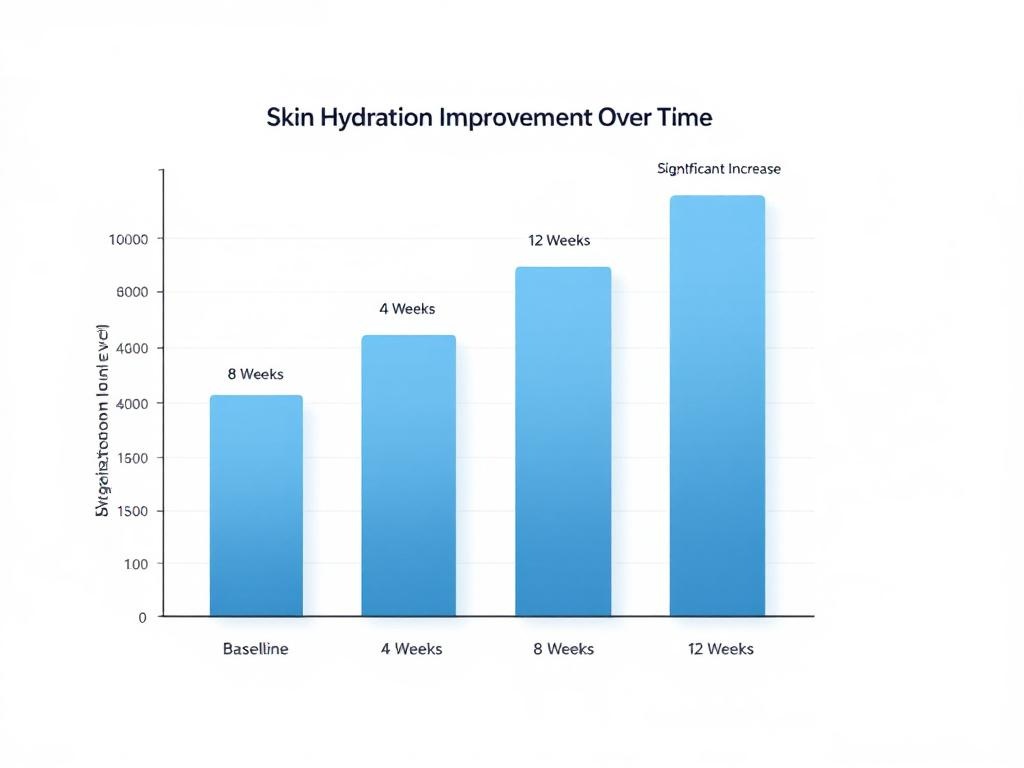
One of the most consistent findings across the 26 trials was the improvement in skin hydration.
The meta-analysis confirmed statistically significant increases in skin moisture content among participants taking oral collagen compared to placebo groups. But what does “hydration” really mean for your skin?
Think of your skin’s moisture barrier like a plumped-up sponge. When adequately hydrated:
- Fine lines appear less pronounced
- Skin texture feels smoother
- That coveted “glow” or “plumpness” becomes visible
- Makeup applies more evenly
- Skin appears more resilient to environmental stress
The data indicates that oral collagen peptides help the skin retain moisture more effectively, likely by supporting the dermal extracellular matrix—the structural network that holds water molecules in place.
Does Collagen Improve Skin Elasticity? The Firmness Factor
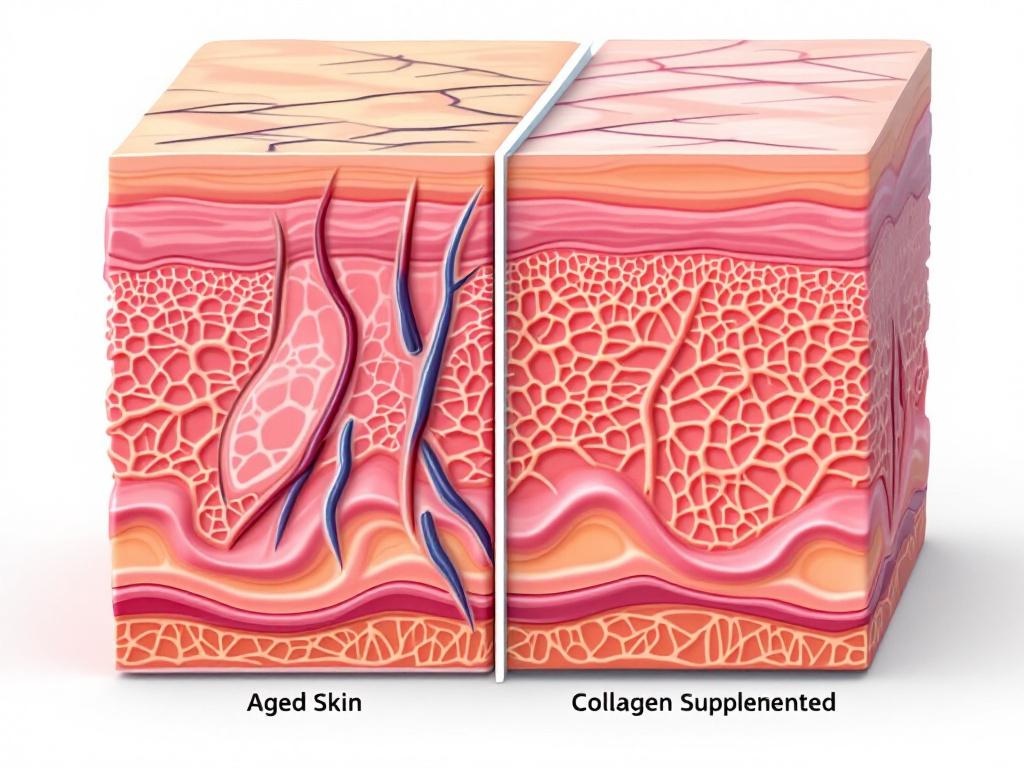
Perhaps even more impressive was the finding on skin elasticity—essentially, your skin’s ability to “snap back” when stretched.
The meta-analysis showed that collagen supplementation produced highly significant improvements in skin elasticity compared to placebo, with a p-value of less than 0.00001. In statistical terms, this is about as close to “definitely not a coincidence” as science gets.
Why does elasticity matter?
- Loss of elasticity = sagging skin
- Improved elasticity = firmer, more lifted appearance
- Better elasticity correlates with reduced appearance of deep wrinkles
- Elastic skin recovers better from facial expressions (those “expression lines” that start to stick around)
The improvement in elasticity suggests that oral collagen peptides don’t just sit on the surface—they appear to influence the actual structural proteins in your dermis.
Wrinkle Reduction: The Visual Proof
Multiple trials within the meta-analysis also measured wrinkle depth and volume. The consensus? Statistically significant reductions were observed, particularly around the eyes (crow’s feet) and perioral area (around the mouth).
These weren’t subjective “I think I look better” assessments—researchers used objective measurement tools like:
- Cutometry (measures skin elasticity)
- Corneometry (measures hydration)
- VISIA imaging systems (3D wrinkle mapping)
- Profilometry (measures skin surface roughness)
The clinical consensus: Oral collagen supplementation produces measurable, objective improvements in key skin aging biomarkers.
👉 Discover VERISOL® in Collagen Select
Myth-Busting: Marine vs. Bovine Collagen—Does Source Really Matter?
Here’s where things get interesting—and where a lot of marketing hype gets dismantled by actual data.
The Myth: “Marine Collagen Is Superior to Bovine”
If you’ve researched collagen supplements, you’ve probably encountered claims that marine (fish-derived) collagen is more effective than bovine (beef-derived) or porcine (pork-derived) collagen.
The reasoning usually goes something like this:
- “Marine collagen has smaller peptides”
- “Fish collagen is more bioavailable”
- “Marine collagen is closer to human collagen Type I”
Sounds convincing, right? There’s just one problem: the science doesn’t support a significant difference.
What the 2023 Meta-Analysis Actually Found
The researchers specifically examined whether collagen source (marine, bovine, porcine, or chicken) affected outcomes.
Their finding: There was no statistically significant difference in skin elasticity improvement based on collagen source.
Read that again: Fish collagen did not outperform beef collagen. Bovine collagen did not outperform marine collagen.
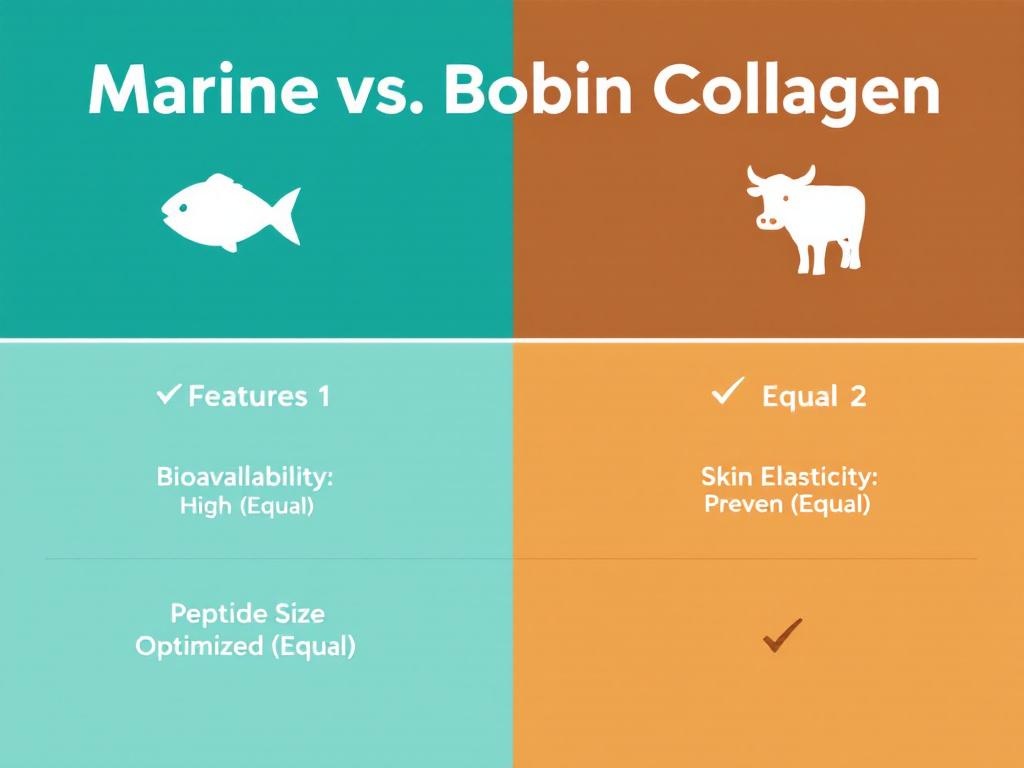
Marine vs Bovine Collagen: Side-by-Side Comparison
| Feature | Marine Collagen | Bovine Collagen (VERISOL®) |
|---|---|---|
| Bioavailability | High (when properly hydrolyzed) | High (when properly hydrolyzed) |
| Peptide Size | Small (2,000-5,000 Daltons) | Small (optimized 2,000-5,000 Daltons) |
| Skin Elasticity Results | Proven in clinical studies | Proven in clinical studies |
| Cost | Generally higher | More affordable |
| Sustainability | Depends on fishing practices | Generally more sustainable |
| Allergen Concerns | Risk for fish/shellfish allergies | Risk for beef allergies (rare) |
| Clinical Research | Multiple studies | Extensive studies (VERISOL® specific) |
| Effectiveness | No significant difference | No significant difference |
What Actually Matters: Hydrolysis and Peptide Quality
So if the animal source doesn’t matter, what does?
Hydrolysis—the process of breaking down collagen into smaller peptides—is what determines bioavailability and effectiveness.
When collagen is properly hydrolyzed:
- Peptides are small enough (typically 2,000-5,000 Daltons) to be absorbed in the intestine
- They can enter the bloodstream intact
- They signal fibroblasts (your skin’s collagen-producing cells) to ramp up production
- They provide the amino acid building blocks (especially glycine, proline, and hydroxyproline) needed for collagen synthesis
The takeaway: A high-quality, well-hydrolyzed bovine collagen can be just as effective—if not more so—than a poorly processed marine collagen.
Why Collagen Select Uses VERISOL® Bovine Collagen Peptides

Collagen Select is formulated with VERISOL®, a specific type of bioactive bovine collagen peptides that has been the subject of multiple clinical trials.
VERISOL® isn’t just generic cow-derived collagen—it’s:
- Enzymatically optimized for specific peptide chain lengths that target skin
- Clinically studied in multiple double-blind, placebo-controlled trials
- Proven to stimulate skin metabolism at the cellular level
One landmark study by Proksch et al. (2014) on VERISOL® found:
- Up to 65% increase in procollagen type I synthesis (your body’s precursor to collagen production)
- Significant reduction in eye wrinkle volume after 8 weeks (up to 20% reduction)
- Improved skin elasticity measurable by cutometry
The point? It’s not about whether it comes from a fish or a cow—it’s about whether the peptides are clinically optimized for skin benefits.
VERISOL® checks that box.
👉 Discover VERISOL® in Collagen Select
Timeline: How Long Does It Take for Collagen to Work?
One of the most common reasons people abandon collagen supplements is unrealistic expectations about timing.
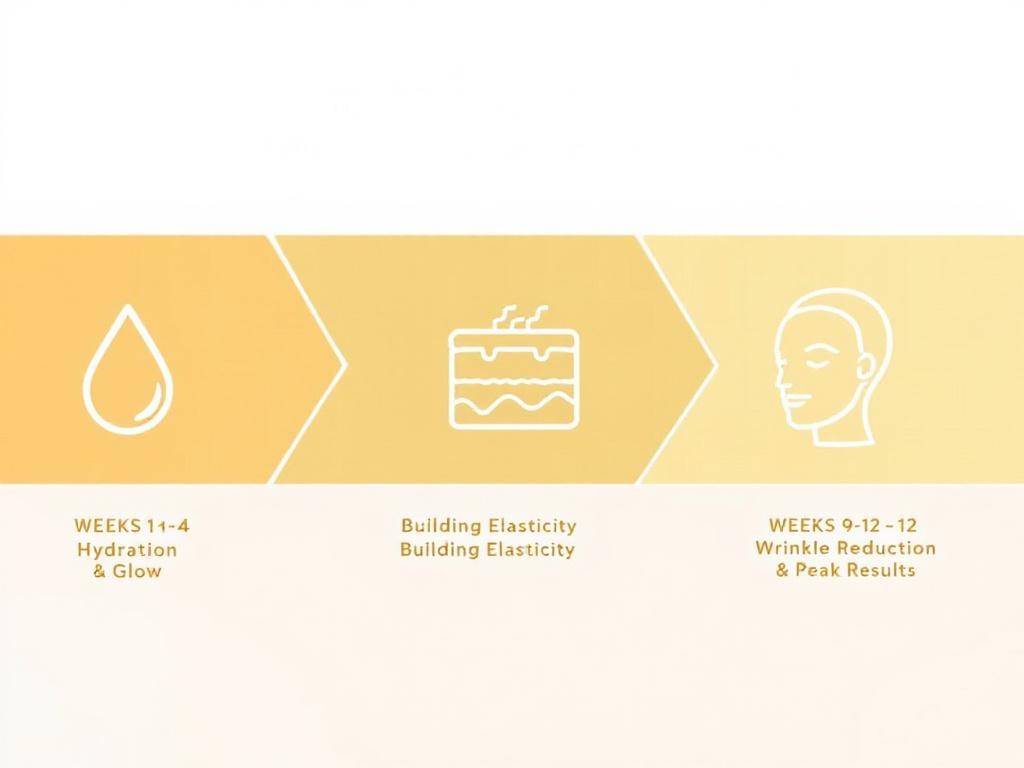
Let’s be clear: collagen is not Botox. You won’t wake up the next morning with plumper skin. But if you understand the science-backed timeline, you’ll know exactly when to evaluate results—and why consistency matters more than intensity.
Week 1-4: The Hydration Phase
What the studies show: Early improvements in skin hydration can be detected as soon as 4 weeks.
What you might notice:
- Skin feels slightly more supple
- Makeup may apply more smoothly
- Subtle improvement in skin texture
What’s happening internally: Collagen peptides are being absorbed, circulating in your bloodstream, and beginning to signal fibroblast activity. Your skin’s moisture retention is improving at the cellular level.
Important: This is not the time to judge full effectiveness. Hydration is the foundation, but the structural changes take longer.
Week 5-8: The Building Phase
What the studies show: By 8 weeks, measurable improvements in elasticity and wrinkle depth become statistically significant.
What you might notice:
- Fine lines around eyes appear softer
- Skin feels firmer to the touch
- Overall complexion looks more “lifted”
What’s happening internally: Your fibroblasts are now actively producing more collagen and elastin. The dermal matrix is being rebuilt. This is when the structural benefits start to manifest visibly.
Week 9-12: Peak Results
What the studies show: The most dramatic improvements in wrinkles, elasticity, and overall skin quality are typically observed at the 12-week mark.
What you might notice:
- Significant reduction in crow’s feet and smile lines
- Improved skin bounce and resilience
- Compliments from people who haven’t seen you in a while
What’s happening internally: Collagen density in the dermis has increased. The extracellular matrix is more robust. Your skin’s biological age markers have measurably improved.
The Critical Takeaway: Don’t Stop at Week 4
The science is clear: The real transformation happens between weeks 8 and 12.
If you quit after one month because you “don’t see results,” you’re stopping just before the structural improvements kick in. It’s like planting a seed, watering it for two weeks, then digging it up because you don’t see a tree yet.
Recommendation: Commit to at least a 90-day trial to give your body the full collagen synthesis cycle.
👉 Get the 3-Month Transformation Bundle
Safety Profile: Is Collagen Supplementation Safe?
One of the most reassuring findings from the 2023 meta-analysis was the consistent safety profile across all 26 studies.
What the Research Shows:
- Minimal adverse effects reported
- No serious safety concerns identified
- Most common mild effects: slight digestive discomfort (rare), mild taste issues (product-dependent)
- No contraindications for most healthy adults
Who Should Exercise Caution:
While generally safe, certain groups should consult a healthcare provider before starting:
- Individuals with fish or shellfish allergies (if using marine collagen)
- Those with beef or pork allergies (if using bovine/porcine collagen)
- People with kidney disease (due to protein metabolism considerations)
- Pregnant or breastfeeding women (not due to known risks, but due to limited specific research)
Compliance Note:
Collagen supplements like Collagen Select are designed to support skin health and maintain a youthful appearance. They are not intended to diagnose, treat, cure, or prevent any disease, including skin conditions like eczema, psoriasis, or dermatitis.
Always follow recommended dosages and consult with a healthcare professional if you have specific medical concerns.
Frequently Asked Questions About Collagen Supplements
Is collagen safe for kidneys?
For healthy individuals, collagen supplements are generally safe for kidney function. However, people with pre-existing kidney disease should consult their healthcare provider before taking collagen, as it increases protein intake which may need to be monitored in kidney conditions.
Can I take collagen with coffee?
Yes, you can take collagen with coffee. However, some evidence suggests that taking collagen with vitamin C (found in citrus juices) may enhance absorption. Many people mix collagen powder into their morning coffee without issues.
What is the best time to take collagen?
Research doesn’t show a significant difference in effectiveness based on timing. Many people take collagen in the morning with breakfast or before bed. The most important factor is consistency—taking it daily at the same time helps build the habit.
Does Collagen Select have side effects?
Collagen Select is generally well-tolerated. Based on clinical studies of collagen supplementation, side effects are rare and typically mild, such as minor digestive discomfort or a feeling of fullness. If you experience any adverse reactions, discontinue use and consult a healthcare provider.
How much collagen should I take daily?
Most clinical studies showing skin benefits used doses between 2.5-10 grams per day. Collagen Select provides an optimal dose based on the VERISOL® clinical research. Always follow the product’s recommended dosage.
Can I take collagen if I’m vegan?
Traditional collagen is animal-derived (bovine, marine, or porcine). However, some companies are developing “vegan collagen” using genetically modified yeast and bacteria, though this is not the same as traditional collagen peptides and has less clinical research supporting it.
Will collagen help with joint pain?
While this article focuses on skin benefits, some research suggests collagen (particularly Type II collagen) may support joint health. However, joint support typically requires different formulations than those optimized for skin.
Can men take collagen supplements?
Absolutely. Collagen benefits are not gender-specific. Men experience collagen loss with age just as women do, and clinical studies include both male and female participants.
Conclusion: Why Collagen Select Aligns With the Science
Let’s bring it all together.
The 2023 systematic review and meta-analysis of 26 randomized controlled trials provides robust evidence that oral collagen supplementation works for improving skin hydration, elasticity, and reducing wrinkles.
But not all collagen supplements are created equal.
Collagen Select stands out because:
- It contains VERISOL®, a clinically studied bovine collagen peptide with documented efficacy in stimulating collagen synthesis and reducing wrinkles
- The peptides are optimized for bioavailability, ensuring they reach your skin cells where they’re needed
- The formulation is backed by the same type of rigorous science reviewed in the 2023 meta-analysis
- It’s designed for the 8-12 week transformation timeline that research confirms is necessary for real results
Your Next Step
If you’ve been on the fence about collagen—wondering if it’s just another wellness trend—the data is in. This isn’t hype. It’s science.
But remember:
- Consistency matters more than intensity
- Results take 8-12 weeks to fully manifest
- Quality of peptides matters more than animal source
You wouldn’t expect to see muscle growth after one week at the gym. Similarly, collagen works by supporting your body’s natural regeneration processes—and that takes time.
Give your skin the 90-day transformation it deserves.
👉 Start Your 3-Month Collagen Select Journey Today
References
Disclaimer: This article is for informational purposes only and is not intended as medical advice. Collagen Select is a dietary supplement designed to support skin health and is not intended to diagnose, treat, cure, or prevent any disease. Individual results may vary. Always consult with a qualified healthcare professional before starting any new supplement regimen, especially if you have pre-existing health conditions or are taking medications.
⚠️ Important Safety Information
Medical Disclaimer: This content is educational and is NOT medical advice. Before
taking ANY supplements discussed in this article, you MUST consult with a qualified
healthcare provider—especially if you take medications, have diabetes, kidney disease,
heart conditions, are pregnant/breastfeeding, or have a history of eating disorders.
This is not medical advice. Results vary by individual. See our full
Medical Disclaimer.
Affiliate Disclosure: This article contains affiliate links to supplement retailers.
We earn commissions from qualifying purchases at no additional cost to you.